Painting a peaceful sunset pier in watercolor is a simple process anyone can follow, even beginners. The key is to focus on creating smooth color blends for the sky and water, then adding clear shapes like the pier and gentle details such as tree branches and reflections. By breaking the scene into easy steps—painting the sky, water, pier, and finishing touches—one can capture the calm and beauty of a sunset by the lake.
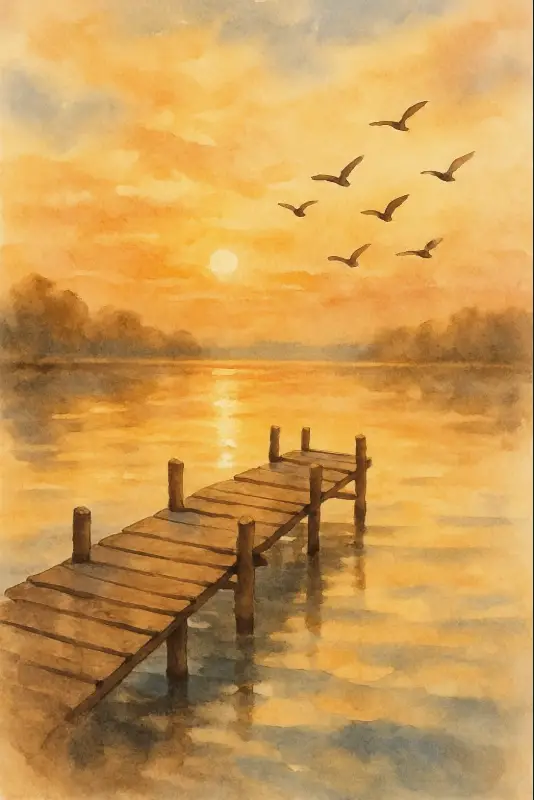
This guide will show how to use basic watercolor techniques like wet-on-wet blending for soft skies and layering for depth in the pier and reflections. With patience and the right tools, the scene will come alive with colors fading from blues to pinks and purples, and a rustic pier standing quietly over the water. When done correctly, the painting will invite viewers to feel the peacefulness of the moment.
Readers will gain clear, step-by-step instructions to complete their own sunset pier watercolor. This approach balances technique with creativity, making the project rewarding and relaxing. For more detailed visual guidance, following a step-by-step tutorial on painting a sunset lake pier can also be helpful.
How To Paint A Sunset Lake Pier
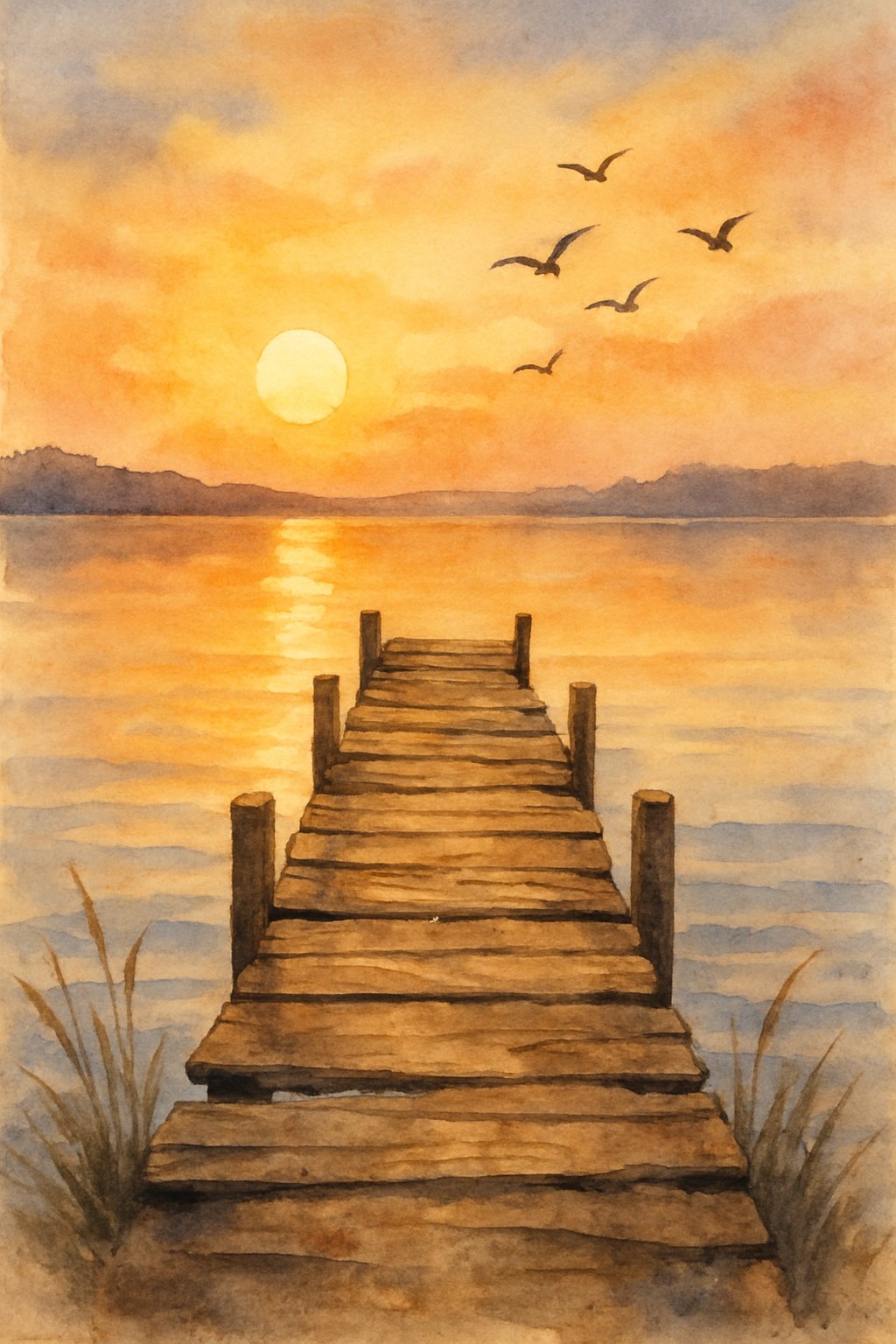
To paint a sunset lake pier, start by preparing the canvas with a smooth wash of sky and water colors. Use soft blues, pinks, and purples to create a gentle gradient that suggests a calm sunset. Blending these colors horizontally helps achieve a natural transition between the sky and the lake.
Next, define the horizon with a thin chalk line once the paint is dry. This line separates the sky from the lake and guides the placement of other elements like mountains and reflections. Thin, translucent layers are useful for painting distant mountains, giving depth without overpowering the scene.
The pier is a simple shape, usually a trapezoid, painted in dark colors like black or deep brown to stand out against the lighter background. Adding subtle horizontal lines in white or raw umber creates a rustic effect. Vertical beams can be painted with thinner strokes, gradually taller toward the back to show perspective.
Small details like silhouettes of birds, grass, or a duck add interest without distracting from the scene’s peace. Painting tree branches with dark browns and blacks on the corners frames the image and adds balance.
Use small round brushes for blossoms or leaves, lightly dabbing to suggest clusters of flowers. These touches enhance the scene’s calm and natural feel.
For a detailed guide, see this How To Paint A Sunset Lake Pier step-by-step tutorial.
How to Paint a Sunset and River Side Dock!
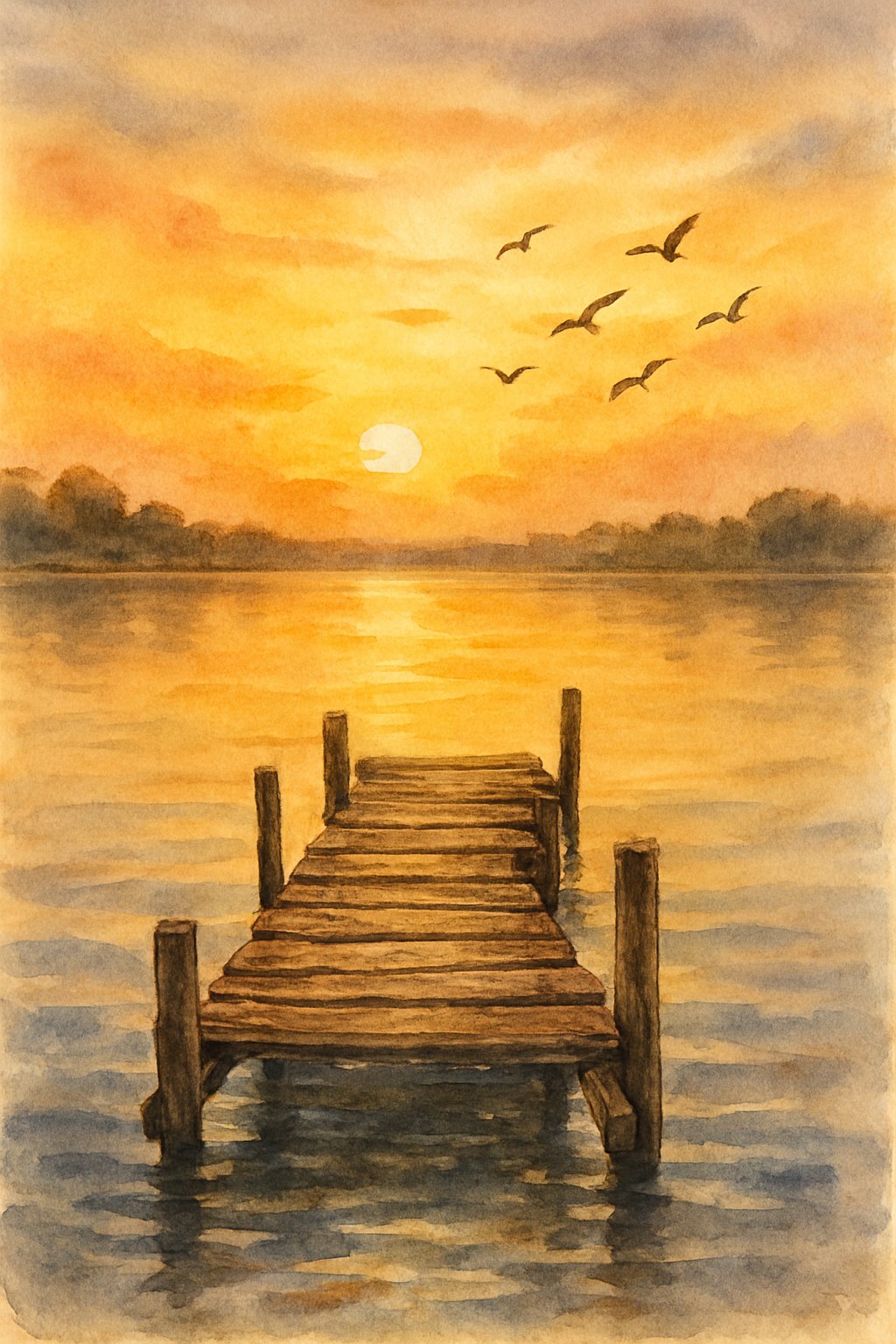
Begin by painting the sky with soft, warm colors like pink, orange, and purple. Use light washes to create a smooth gradient that blends from the horizon upward. This sets the peaceful mood of the sunset.
Next, paint the water below the sky. Mirror the colors of the sky in the water, using horizontal strokes to suggest reflection. Keep the brushstrokes gentle to show calm water.
For the dock, start with simple shapes such as rectangles and trapezoids for the pier and posts. Use darker tones like deep browns or blacks to create the silhouette effect against the bright sky.
Add subtle details like wooden planks or beams with thin horizontal or vertical lines. This adds structure without overwhelming the simplicity of the scene.
Finally, include small touches like tree branches or grasses near the dock. These natural elements help frame the area and add depth.
| Key Materials | Recommended Colors | Brush Types |
|---|---|---|
| Watercolor paper | Pink, orange, purple, brown, black | Flat, round, liner |
| Water container | Yellow, cobalt blue, magenta | Wash brush |
| Palette for mixing | Titanium white (optional for lifting) | Fine detail brush |
This step-by-step approach allows painters to capture a tranquil riverside dock at sunset with clarity and ease. For more detailed tutorials, see this guide on how to paint a sunset and river side dock.
Choosing Materials for Painting a Watercolor Sunset Pier
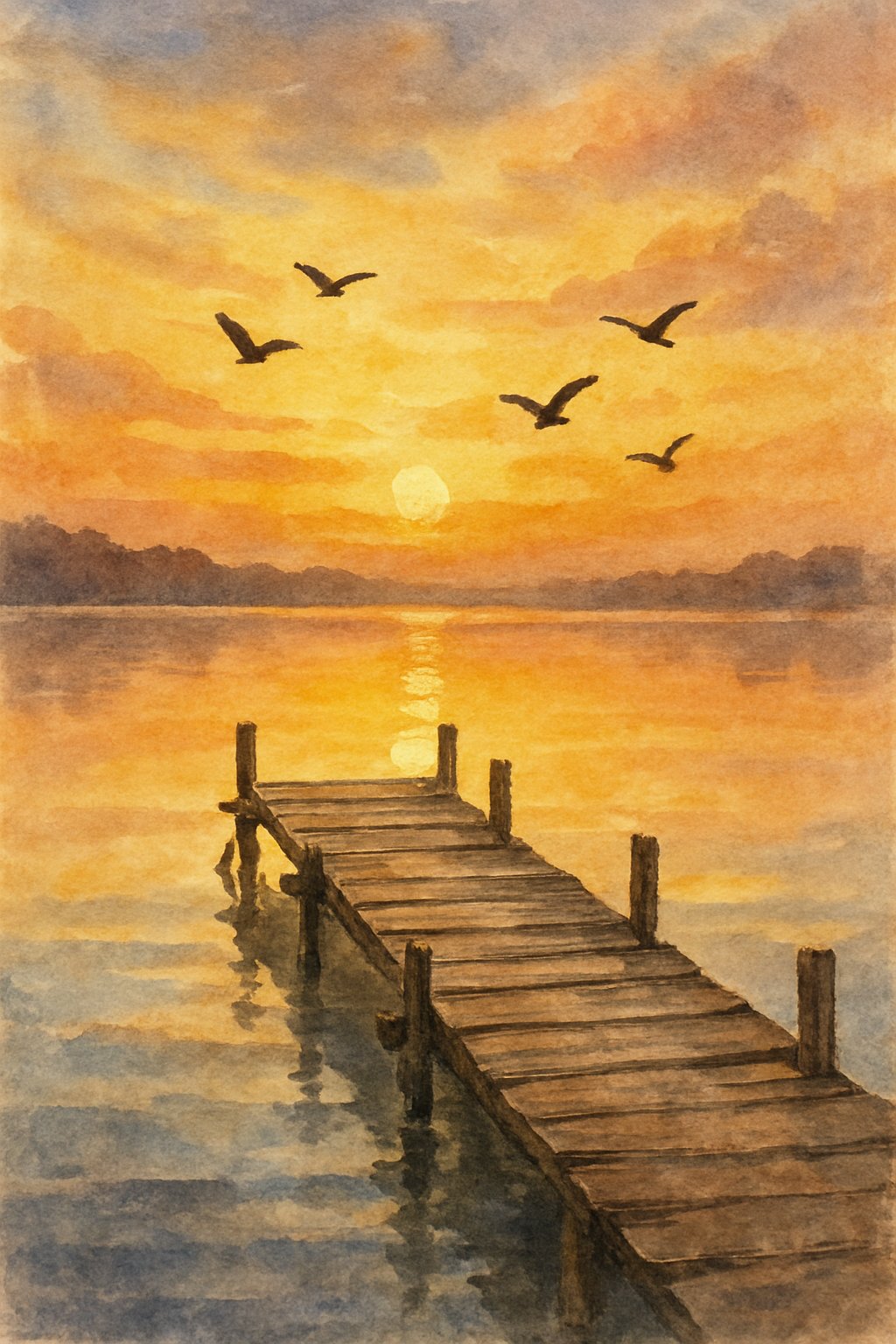
Selecting the right materials is key to a successful watercolor painting. For a sunset pier scene, the choice of paper, brushes, and paints affects how colors blend and how details appear.
Watercolor paper should be 100% cotton with a cold-pressed texture. This type of paper holds water well and supports the wet-on-wet technique, which is important for smooth color transitions in the sky and water.
Brushes come in different shapes and sizes. A big flat brush is useful for applying clean water over large areas quickly. Round brushes in medium and small sizes work well to build layers and add details, like the pier’s wood texture or reflections on the water.
Using a high-quality pigment like Cadmium Red Light helps create vibrant, warm tones typical of sunsets. This color mixes well with yellows and oranges to produce rich skies. It is important not to overuse water with the pigment to keep colors bright and avoid dullness.
Additional tools like a pencil for a light sketch, masking tape to fix the paper on a board, a cup of clean water, and paper towels make the process smoother. Together, these materials allow the artist to capture the peaceful mood of a sunset over a pier effectively.
For more detailed steps on using these materials, see this watercolor sunset step-by-step guide.
Planning Your Sunset Pier Composition

When planning a sunset pier painting, the artist should start by choosing a clear focal point. The pier itself usually serves as the main subject, drawing the viewer’s eye toward the calm water and glowing sky.
The placement of the horizon line is important. It should be slightly above or below the center of the paper. This helps create a balanced scene and avoids a static, flat look.
They need to decide how much of the sunset sky to include. A larger sky area emphasizes the colors and mood of the sunset, while a smaller sky focuses more attention on the pier and water reflections.
Sketching a rough outline with a pencil can help test different layouts. It allows the painter to arrange the pier, water, and sky elements in a pleasing way before adding color.
The sunset scene often includes soft gradients of orange, red, and purple in the sky. They can plan where the light source—the setting sun—will be and how it interacts with the pier and water reflections.
Using simple shapes and light guidelines helps keep the composition clear and avoids overcomplicating the painting early on.
Key composition tips:
- Avoid placing the horizon line in the center.
- Keep the pier slightly off-center for visual interest.
- Plan where the sun will sit relative to the pier and water.
- Consider the reflections and how they mirror the sky’s colors.
This planning supports a calm, peaceful atmosphere for the sunset pier painting. For more detailed painting steps, see How To Paint A Sunset Lake Pier.
Techniques for Painting the Watercolor Sunset Sky

To paint a watercolor sunset sky, artists often start with the wet-on-wet technique. This means wetting the paper first, then applying colors while the paper is still damp. This method helps create smooth, soft blends that mimic the natural gradient of a sunset.
They typically begin with light colors near the sun, such as pale yellows or soft oranges. Using colors like cadmium red light mixed with yellow can bring warmth and glow to the horizon. These warm colors gradually transition into cooler tones like blues and purples as the sky moves upward.
When applying paint, it’s important to work quickly while the paper is wet. This ensures the colors blend gently without hard edges. Artists use a large flat brush to cover broad areas first, then smaller round brushes to add details like soft clouds.
Clouds in a sunset sky are often painted using a mix of reds, purples, and sometimes a bit of neutral tint. They should have a loose, irregular shape. Using a damp brush to soften edges makes clouds look more natural and dreamy.
Patience matters here. Letting each layer dry before adding deeper colors helps avoid muddy tones. The combination of layering, timing, and careful color choice creates a peaceful, glowing watercolor sunset sky. For more detailed guidance, see this step-by-step watercolor sunset painting tutorial.
Adding the Pier and Foreground Elements

The pier is a key part of the sunset scene and helps create depth. Start by sketching the pier lightly with a pencil, placing it so it stretches toward the water. Keep the lines simple to avoid overcrowding the painting.
Use darker colors to paint the pier, like browns or dark grays. This will make it stand out against the lighter sky and water. Adding some texture with brush strokes can show the wood grain and weathered look of the pier.
Foreground elements like rocks, plants, or silhouettes of birds add interest and balance. Use dark, solid shapes for these, as they are usually seen as shadows in a sunset painting. This contrast draws the viewer’s eye and frames the scene well.
When painting the water near the pier, reflect some of the sunset’s colors softly. Use horizontal strokes to mimic gentle waves and blend the colors smoothly to keep the calm mood.
Tips for painting pier and foreground:
- Use a thin brush for pier details
- Keep foreground shapes simple and bold
- Reflect warm sunset colors in water
- Use dark tones to create silhouettes
These steps help anchor the painting and make the peaceful sunset scene feel complete. For more detailed guidance on painting sunset piers, a step-by-step acrylic tutorial can be useful.
Final Details and Finishing Touches
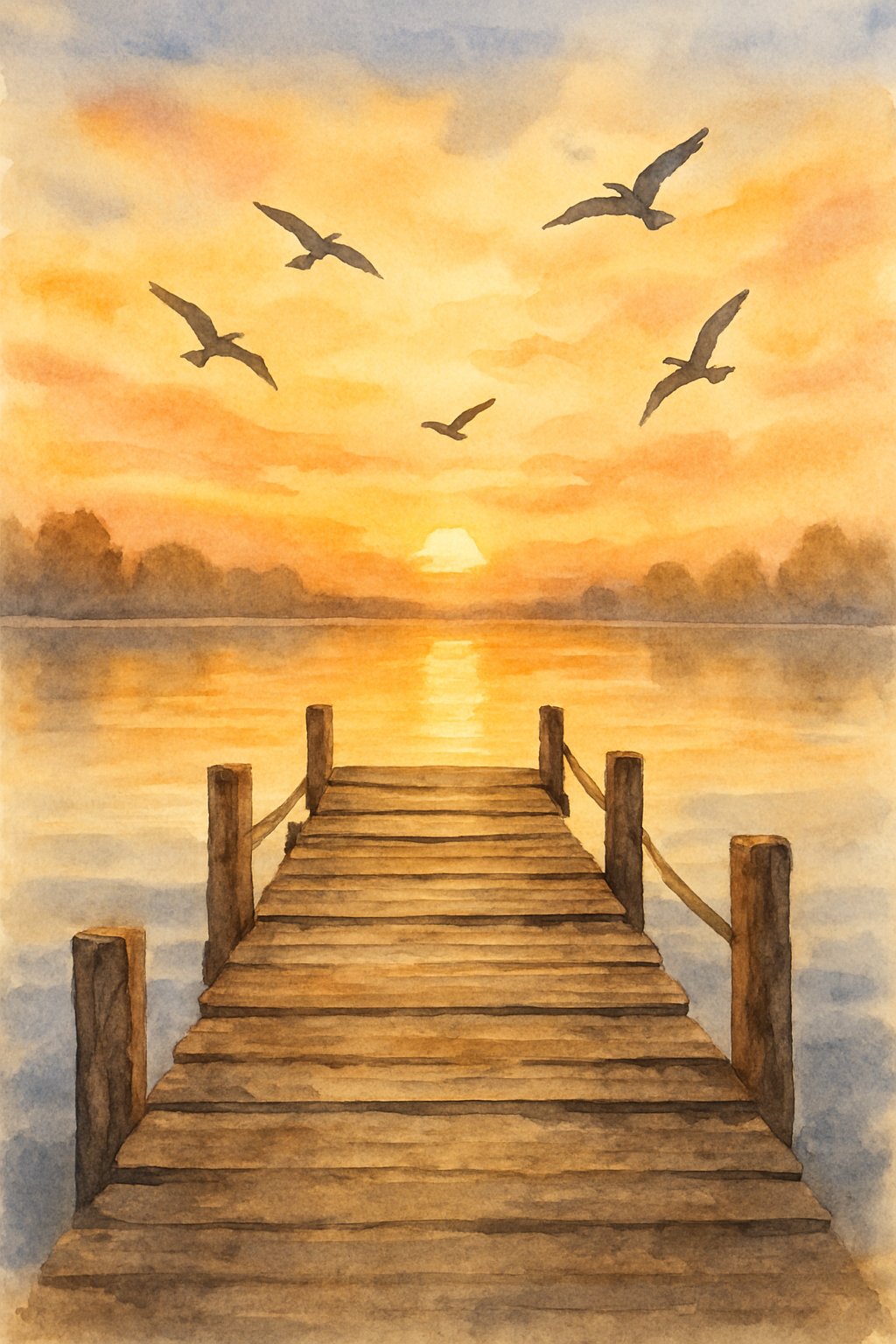
At this stage, the artist focuses on sharpening the main features of the sunset pier. Using a fine watercolor brush, they add crisp lines to the pier’s wooden planks and posts to create clear structure. These sharp details help the pier stand out against the soft background.
Small highlights can be added by lifting paint or using white gouache sparingly. This technique gives the illusion of light reflecting off wet surfaces or edges of the wood. It adds a subtle glow and enhances realism without overpowering the scene.
Birds or small boats can be painted near the horizon to bring gentle life to the composition. These tiny elements use a detail brush with controlled strokes. They add movement and interest, balancing the calm water and sky.
Finally, the artist may deepen shadows under the pier or along the water’s edge. Using a darker mix of the colors already used keeps the painting harmonious. This step adds depth and anchors the pier within the scene.
Tips for finishing touches:
- Use small, round watercolor brushes for detailed lines.
- Avoid overworking areas; allow layers to dry between steps.
- Apply gentle washes for reflection on water using horizontal strokes.
These final touches help complete the peaceful feel of the watercolor painting while maintaining clarity and balance.
Tips for Achieving a Peaceful and Luminous Result
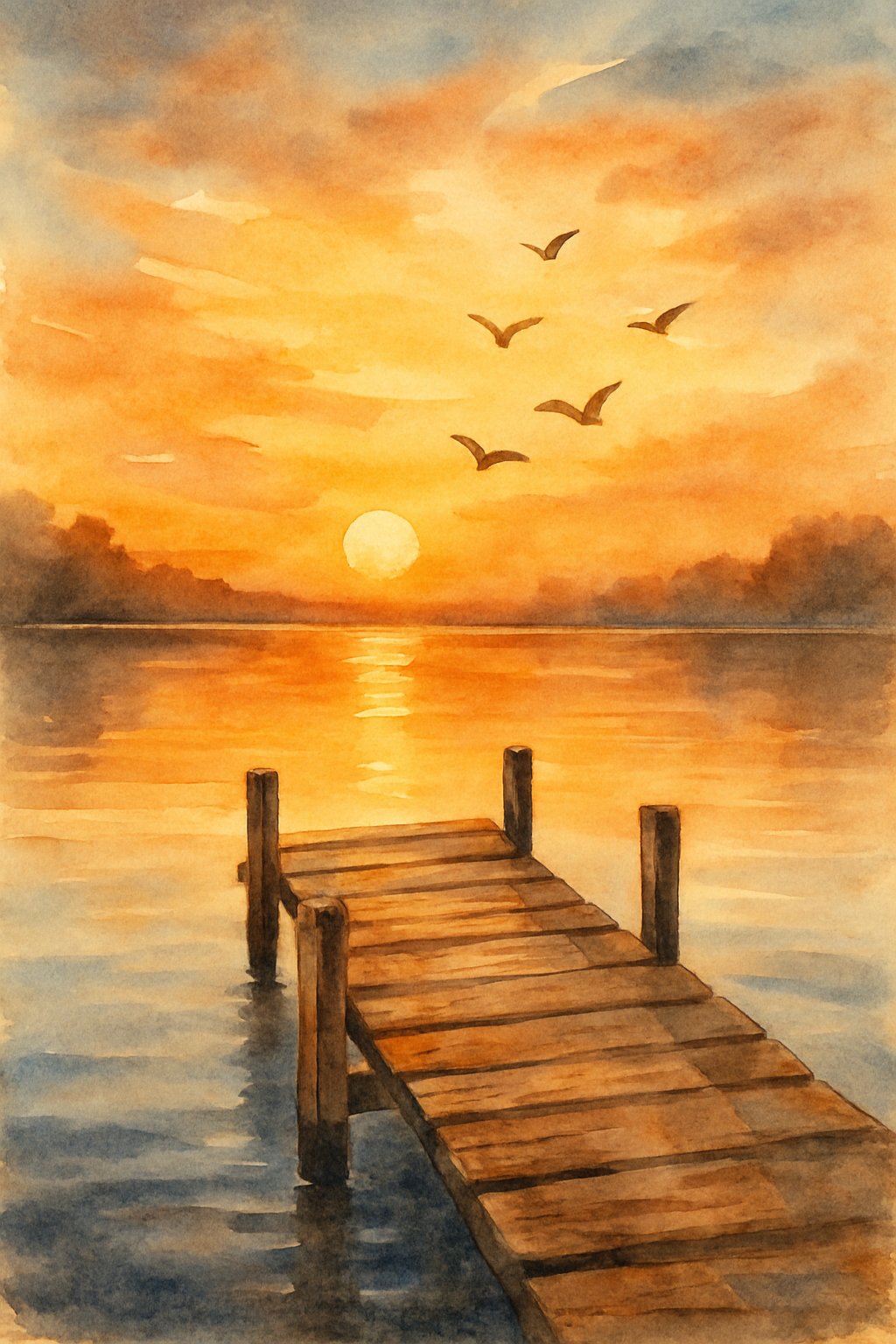
To create a peaceful watercolor sunset, the painter should focus on soft color transitions. Using wet-on-wet techniques helps blend colors gently, producing smooth gradients in the sky and water. This approach mimics natural light and gives the scene a calm feel.
Patience is important when layering colors. It is best to let each layer dry fully before adding the next. This prevents muddy colors and keeps the painting luminous and clean.
The choice of colors plays a key role. Warm tones like Naples Yellow, Opera Pink, and Yellow Orange work well near the sun to create a glowing effect. Cooler colors such as Cerulean Blue and Violet add depth higher in the sky.
Brush care makes a difference too. Keeping brushes clean avoids unwanted color mixing. Using different brush sizes helps achieve detail and softness where needed.
Adding reflections softly in the water enhances the peaceful quality. Horizontal strokes with diluted colors can suggest calm water. Painting the pier and distant trees with softer edges maintains the focus on light and glow.
Small details, like a few silhouetted birds or grass blades, add interest without crowding the scene. These final touches help balance the composition while keeping the mood serene.
Working slowly and with light layers is the best way to keep the sunset feeling natural and peaceful. Each step builds on the last to achieve a luminous look in watercolor sunsets.
For a full step-by-step guide, see this detailed watercolor sunset tutorial.
Frequently Asked Questions

This section covers the important details about materials, steps, and color choices for painting a sunset pier with watercolors. It also explains useful techniques for realistic reflections and sharing the experience with children.
What materials do I need to start a watercolor painting of a sunset pier?
Essential materials include watercolor paints with warm tones like reds, oranges, and yellows. High-quality watercolor paper helps absorb the paint and gives smooth blends.
Brushes of different sizes are needed—larger ones for washes and smaller for details. A palette, water container, pencil, eraser, and paper towels are also required.
Can you outline the basic steps for creating a watercolor sunset at the beach?
Start by lightly sketching the pier and horizon with a pencil. Apply broad washes of warm colors in the sky, blending from reds and oranges near the horizon to softer yellows and purples higher up.
Next, paint the water using similar colors but soften them for reflection. Add details to the pier and waves last, using a smaller brush for accuracy.
What techniques can I use to paint a realistic water reflection in a sunset scene?
Wet-into-wet painting helps create soft, blended reflections on water. Applying colors while the paper is still wet allows them to flow and merge naturally.
Using horizontal brush strokes mimics the look of ripples. Adding subtle highlights with a dry brush or white paint can enhance realism.
How do I choose the right colors for a peaceful sunset in my watercolor painting?
Select warm tones like reds, oranges, and yellows for the sky and sunset glow. Balance these with cooler purples, blues, or soft pinks to add depth without overwhelming the scene.
Use muted shades rather than bright, intense colors to achieve a calm and peaceful feeling in the painting.
What are some effective watercolor tips for capturing the tranquility of a sunset at the pier?
Work quickly with wet washes to keep colors soft and blended. Avoid harsh lines unless defining the pier or distant objects.
Use layering to slowly build color depth while maintaining light and transparency. Control water and pigment amounts to prevent unwanted harsh edges.
How can children get involved in painting a simple watercolor sunset?
Provide children with large brushes and paper to experiment with broad washes of warm colors. Encourage them to paint simple shapes like a horizontal line for the horizon and blocks for the pier.
Keep instructions clear and short, focusing on fun blending and using basic colors to create their own sunset scene.